Ancient tree rings and ice cores help pin down when Babylonia fell
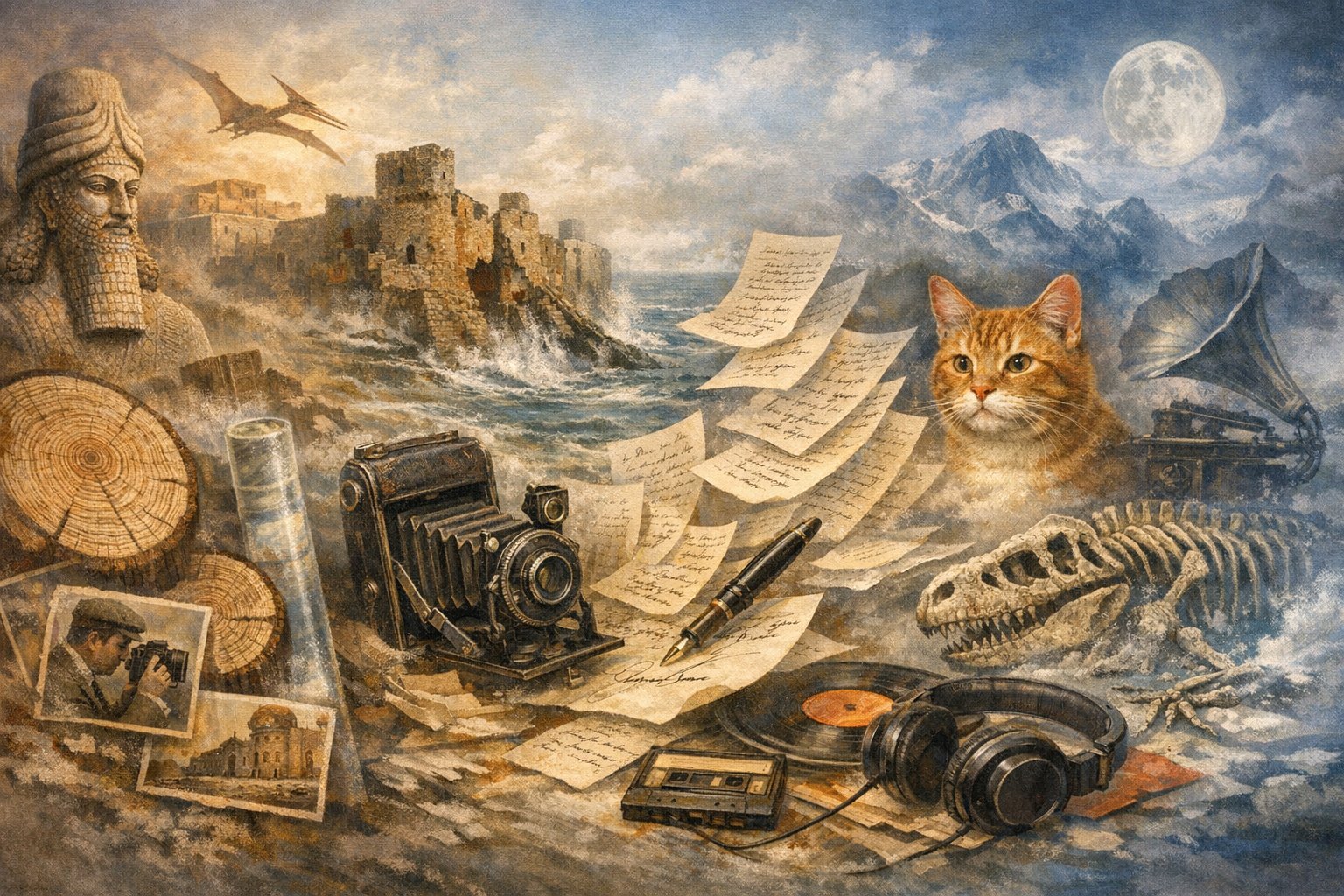
We know quite a lot about ancient Mesopotamia, the historical region spanning modern-day Iraq and parts of Syria and Turkey, such as who ruled and the order in which kings succeeded one another. But pinning down exact calendar dates for historical events has been trickier. Now scientists have found a way to narrow down these uncertainties. The technique involves analyzing ancient tree rings and combining this with evidence of volcanic eruptions preserved in ice cores. That’s helping fill important historical gaps, including when Babylon fell.
A 16th-Century Castle in England Is Falling Into the Ocean, Sparking a Debate Over Whether It Should Be Saved or Allowed to Disintegrate With Dignity
For centuries, Hurst Castle, built on England’s south coast by Henry VIII in 1544 to protect the passage to Portsmouth, was unassailable. Through Tudor spats with France and the Holy Roman Empire, the English Civil War, skirmishes with Napoleon and both world wars, the squat artillery fort was garrisoned and at the ready, but never once attacked. After sitting almost at sea level for four centuries unchallenged, the castle is now under attack from a different sort of enemy, one even more pernicious than the French. Climate change, in the form of rising tides and worsening storms, is washing out the rocky beach from underneath Hurst’s walls.
The Poignant Animation ‘Paper Trail’ Chronicles a Life in Handwriting — Colossal
From an early mishmash of chaotic lines and misspelled words to the loose lilt of a signature scribbled for decades, “Paper Trail” is a moving animation that shows the evolution of a young mind and what we can glean from a life through notes and lists. The latest project by Don Hertzfeldt, the short film follows the protagonist Steven Richardson as he makes his first marks, learns to write his name, doodles, and later completes the perfunctory math problems of elementary school. We witness his cursive lessons and adolescent love letters to a girl named Lindsey before observing grocery lists and remnants of his professional life.
Cats Really Do Meow at Us To Get Our Attention
’t Is niet alsof daar veel wetenschappelijke studie voor nodig was, maar toch: “Scientists in Brazil studied how cats behaved around treats in a box that they couldn’t get their paws on. When a person was in the room at the same time, the cats were much more likely to meow and to alternate their gaze between the person and the box, they found. The findings indicate that cats do indeed meow and use other visual cues to get a human’s attention and help when needed, the researchers said.”
Extraordinary Photography by Alexander “Sasha” Stewart ~ Vintage Everyday
Alexander “Sasha” Stewart (1892–1953) was a prominent Scottish-born photographer and technical innovator active primarily in London during the 1920s, 1930s, and 1940s. Working professionally under the mononym Sasha, he became renowned for his glamorous, dramatic portraits of theatre, ballet, fashion, and high-society figures, as well as for inventing a pivotal piece of early flash photography equipment.
Halloween special XIV: The fossils that haunted Lovecraft | Letters from Gondwana.
Lovecraft began to write “At the Mountains of Madness.” In the novella, Professor Lake finds a cave in Antarctic limestone full of fossils from many ages: “This was my first word of the discovery, and it told of the identification of early shells, bones of ganoids and placoderms, remnants of labyrinthodonta and thecoiidea, great mosasaur skull fragments, dinosaur vertebræ and armor plates, pterodactyl teeth and wing bones, Archaeopteryx débris, Miocene sharks’ teeth, primitive bird skulls, and other bones of archaic mammals…”
Zeg uw gedacht